
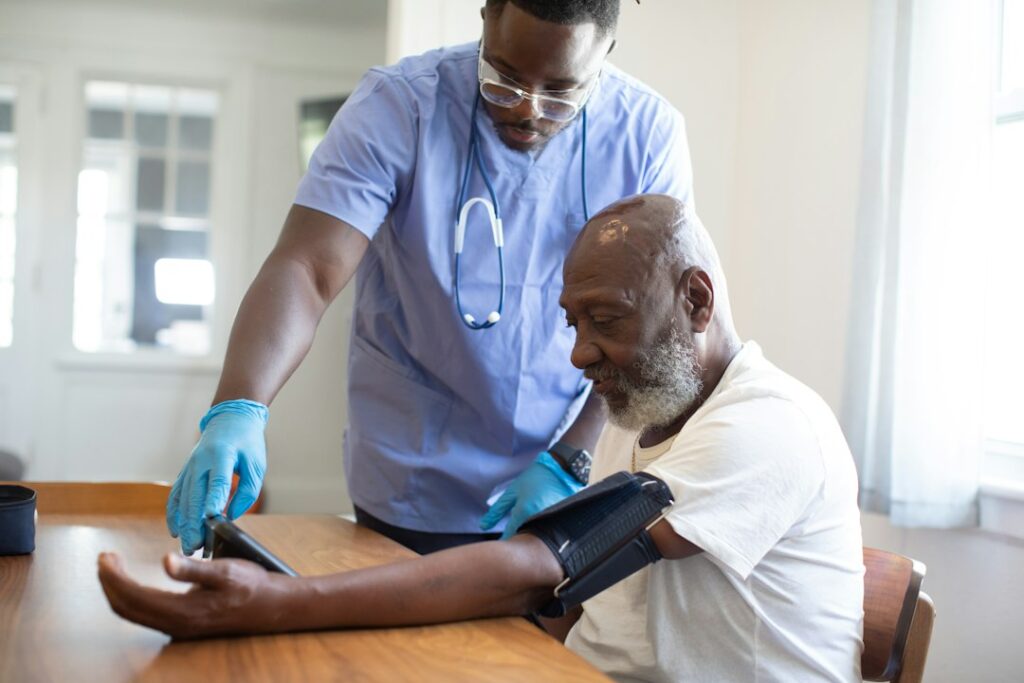
Assisted living can provide more than housing and help with daily routines. Depending on the residence, residents may receive medication support, basic nursing oversight, help coordinating medical care, wellness monitoring, and arrangements for outside health services.
The exact services vary by residence, care level, staffing, and a resident’s assessment. Families in Chester, PA often need to understand the difference between routine assisted living support and medical care that requires a nursing facility or hospital.
What health services are commonly available?
Most assisted living residences provide health-related support intended to help residents remain safe and as independent as possible. These services are usually coordinated through an individual assessment and care plan.
Common services may include:
- Assistance with taking or self-administering medications
- Medication reminders, storage, and administration when permitted
- Monitoring of basic health changes
- Coordination with physicians and other medical providers
- Help scheduling appointments
- Transportation arrangements for medical visits
- Support with bathing, dressing, toileting, eating, and mobility
- Assistance following a prescribed diet
- Emergency response and supervision
- Coordination with home health, hospice, therapy, or other outside services
Assisted living is generally designed for people who need support with daily living but do not require continuous skilled nursing care.
How does medication assistance work?
Medication support is one of the most frequently used health services in assisted living. Staff may remind a resident to take medication, help organize doses, or administer medication according to the residence’s policies and Pennsylvania requirements.
Medication assistance may be useful for residents who:
- Forget doses
- Have several prescriptions
- Need medication at specific times
- Have difficulty opening containers
- Need staff to observe that medication was taken
- Require monitoring for possible side effects
Medication routines should be clearly documented. Families may ask how prescriptions are received, stored, counted, administered, and reviewed when a medication changes.
A residence may also coordinate with a pharmacy or prescriber, but families should confirm what is included in the monthly cost and what may create an additional charge.
Are nurses available in assisted living?
Some assisted living residences have nurses on staff or available on a scheduled or on-call basis. The level of nursing coverage is not the same everywhere.
Nursing staff may help with:
- Health assessments
- Care-plan updates
- Communication with physicians
- Monitoring chronic conditions
- Skin checks and basic wound observation
- Blood pressure, pulse, weight, or blood sugar monitoring when ordered
- Training or supervising direct-care staff
- Recognizing when a resident needs urgent medical attention
Nursing staff in assisted living do not necessarily provide the same continuous medical care available in a nursing facility. A resident with complex medical needs, frequent clinical procedures, or a need for around-the-clock skilled nursing may require a different setting.
What help is available for chronic health conditions?
Assisted living may support residents with stable chronic conditions, including diabetes, arthritis, heart disease, respiratory problems, or memory-related conditions. Support usually focuses on following an established care plan and noticing changes early.
For example, staff may help a resident follow meal instructions, remember medications, use mobility equipment, or attend follow-up appointments. Some residences may also help monitor weight, hydration, blood sugar, or symptoms when these tasks are included in the resident’s plan.
Assisted living is not a substitute for medical diagnosis. New or worsening symptoms still require evaluation by an appropriate medical provider. Sudden chest pain, severe breathing difficulty, signs of stroke, major bleeding, or a serious fall may require emergency response rather than routine residence support.
Can assisted living arrange outside medical services?
Yes. Assisted living residences commonly coordinate with outside health professionals when a resident needs services beyond routine residential care.
Depending on eligibility and the care plan, outside services may include:
- Home health nursing
- Physical, occupational, or speech therapy
- Hospice care
- Behavioral health support
- Podiatry or dental visits
- Laboratory testing
- Medical equipment
- Specialist appointments

These services may take place in the resident’s apartment, in a treatment office, or at another medical location. The residence may help with scheduling and communication, but outside providers generally remain responsible for the clinical service.
During winter weather, heavy rain, or periods of extreme heat, transportation and appointment planning may require extra attention. Families should ask how the residence handles delayed transportation, canceled appointments, and urgent changes in a resident’s condition.
What personal care is considered a health-related service?
Personal care is not the same as skilled medical treatment, but it has a direct effect on health and safety. Staff may assist with bathing, dressing, grooming, toileting, continence care, eating, repositioning, walking, and transferring between a bed and chair.
This support can help reduce risks such as falls, dehydration, poor hygiene, skin problems, and missed meals. It may also help a resident maintain dignity while completing tasks that have become difficult because of weakness, pain, memory loss, or limited balance.
A care plan should explain what the resident can do independently, what requires prompting, and what requires hands-on assistance.
How are changes in a resident’s condition handled?
Assisted living staff are expected to observe residents and report significant changes according to the residence’s procedures. Changes may include a fall, confusion, reduced appetite, unusual sleepiness, fever, weight loss, new pain, difficulty walking, or a change in mood.
Families may want to ask:
- Who is notified first when a health change occurs?
- Is a nurse available to assess the resident?
- How are family members informed?
- When is a physician contacted?
- What happens after an emergency department visit?
- How are hospital discharge instructions added to the care plan?
Clear communication is especially important when several family members, specialists, pharmacies, and caregivers are involved.
What should families verify before choosing a residence?
Services should be reviewed in writing rather than assumed. A residence may offer a service in general but limit it based on staffing, the resident’s condition, timing, or additional fees.
Useful questions include:
- Is a licensed nurse on site, on call, or available only during certain hours?
- Can staff administer medications?
- How are falls and medical emergencies handled?
- Are vital signs or blood sugar checks available?
- Can the residence support incontinence, mobility, or dietary needs?
- What outside services can come into the residence?
- Are transportation arrangements included?
- What happens if the resident’s needs increase?
- Which services are covered by the monthly fee?
- How often is the care plan reviewed?
In Pennsylvania, assisted living residences and personal care homes are licensed categories with different standards and care expectations. Comparing the residence’s license, written policies, staffing model, and assessment process can help families understand what support is realistically available.
The central question is not simply whether a residence offers “healthcare.” It is whether the available services match the resident’s current needs, how those services are delivered day to day, and what plan exists if the resident’s health changes.
